Non-destructive
testing (NDT)
Comprehensive quality control of structures, welded joints and industrial components using VT, PT, MT, ET and UT methods.
is it worth working with us?
Trust our experience and expertise. Learn the cooperation process step by step.
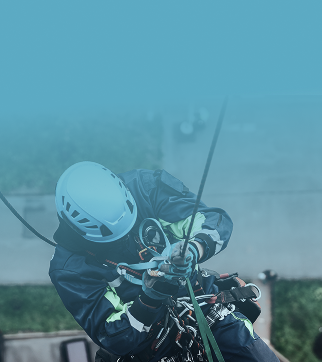
testing using rope access
Trust our
experience and expertise
service offering
Contact us to get
more information

Non-destructive
testing (NDT)
We perform non-destructive testing of components and industrial structures to assess their technical condition, workmanship quality and compliance with design requirements.
NDT methods enable the detection of material discontinuities and welding imperfections without interfering with the structure of the tested component. The testing scope is selected depending on the material type, technical requirements and project specifics.
Our key services
particle testing

VT – Visual testing
Visual testing is the basic quality control method. It allows the identification of visible surface imperfections, assessment of weld workmanship quality and inspection of the condition of structural components.
Applications:


PT – Penetrant testing
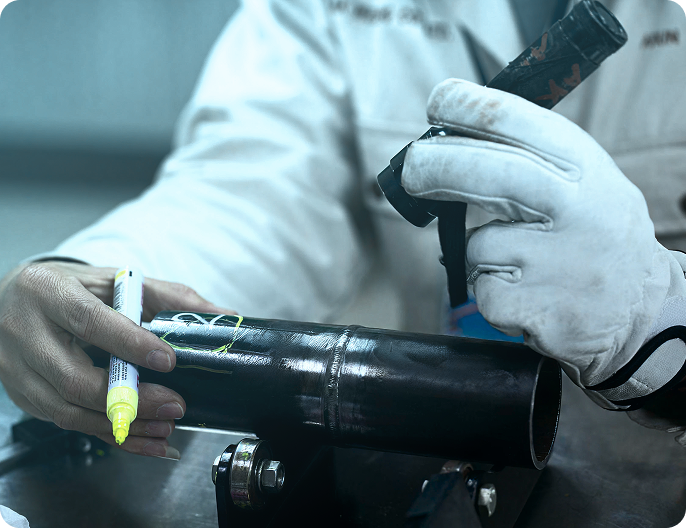
A method intended for detecting discontinuities open to the material surface, such as cracks or porosity. It is used on non-porous materials.
Applications:
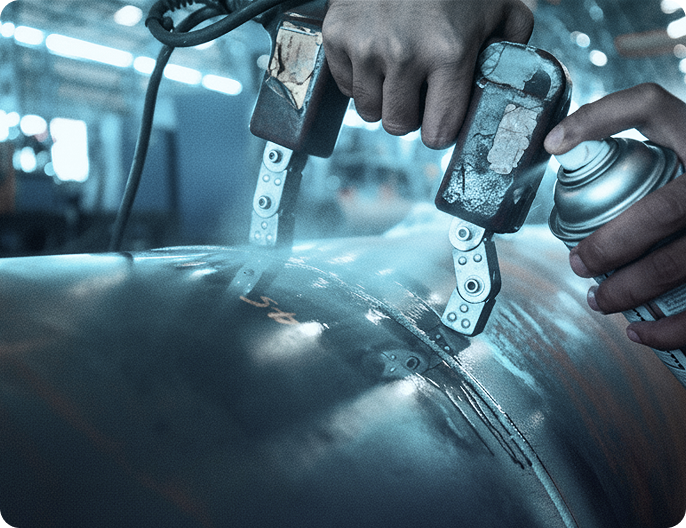
MT – Magnetic
particle testing
A method intended for detecting surface and subsurface discontinuities in ferromagnetic materials.
Applications:
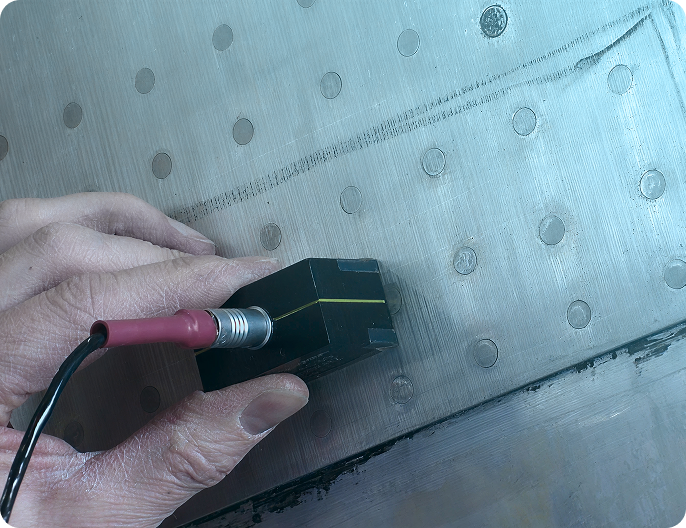
ET – Eddy current testing
A method enabling the detection of surface and subsurface discontinuities without the need to use chemical agents. It also allows the assessment of changes in the material structure.
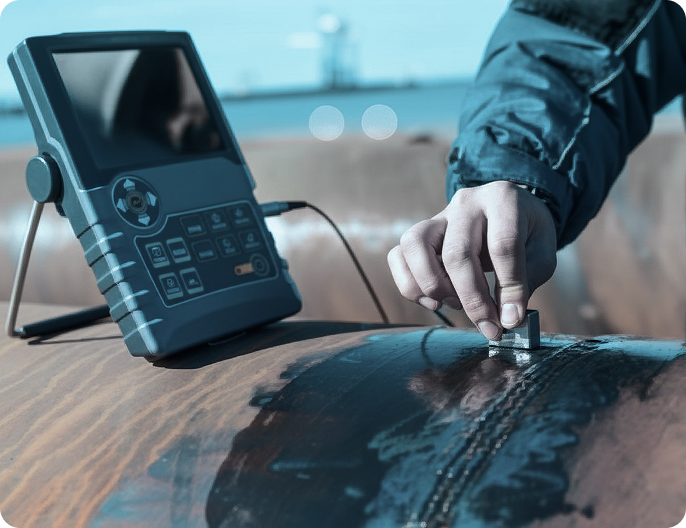
UT – Ultrasonic testing
A volumetric method allowing the detection of internal discontinuities in the material. It enables the assessment of weld quality and structural components of greater thickness.
Applications:
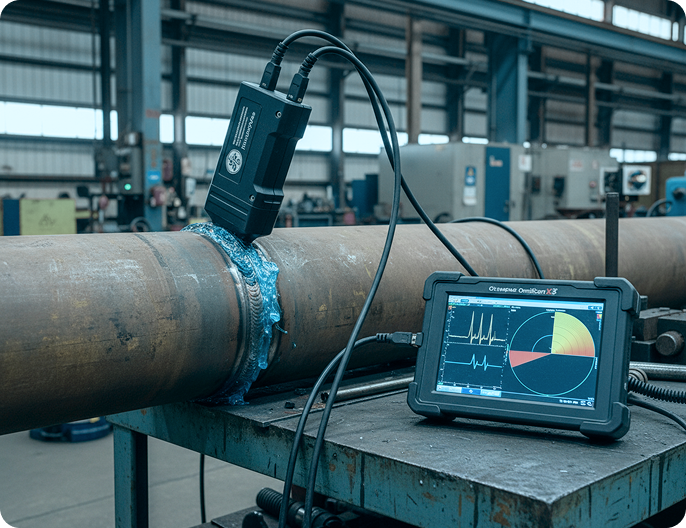
UT TOFD / PA – Advanced ultrasonic techniques
Advanced ultrasonic methods used in projects requiring precise discontinuity analysis and image documentation of inspection results.
Applications:
How to select the method



and documentation
The scope and schedule of testing are determined individually, depending on the specifics of the project. Upon completion, complete documentation containing the test results and conclusions is provided.
We perform testing in accordance with applicable technical requirements and standards used in industry.
Cooperation process

question


a photo
or description


tests

the repair independently
Our specialists
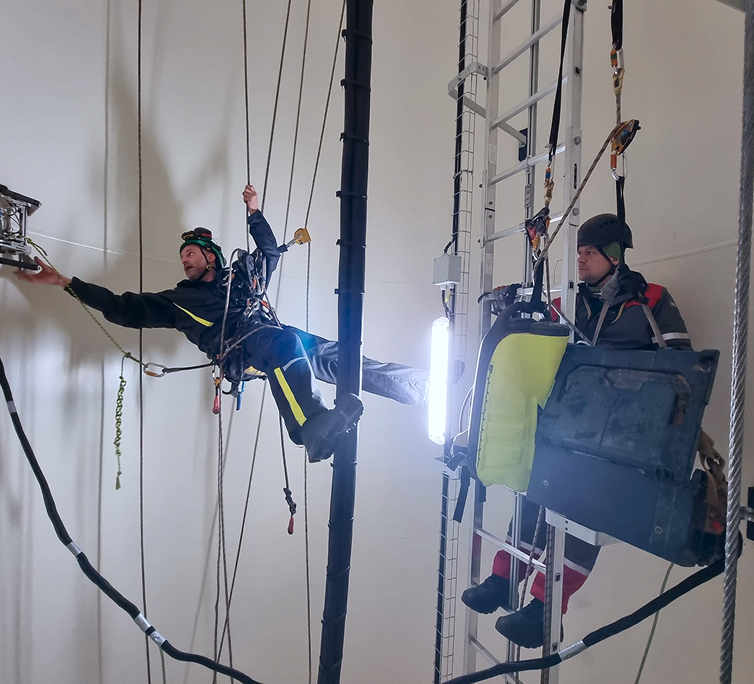
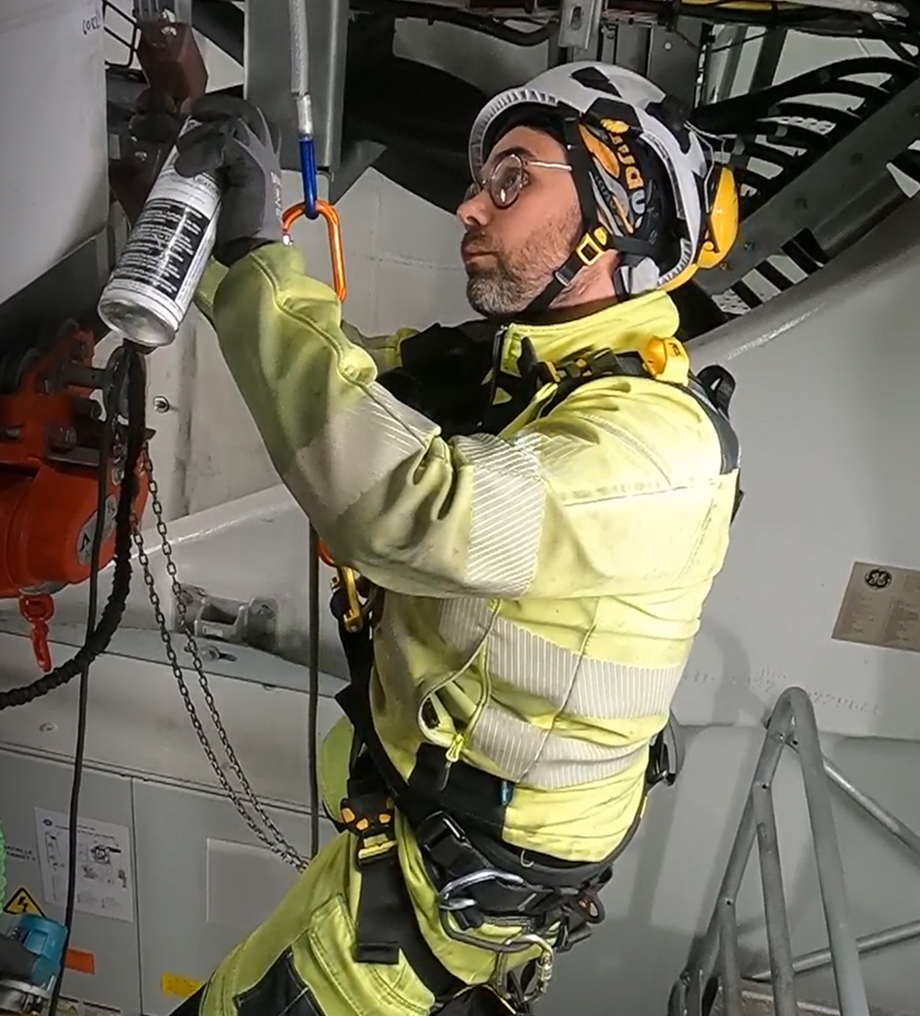
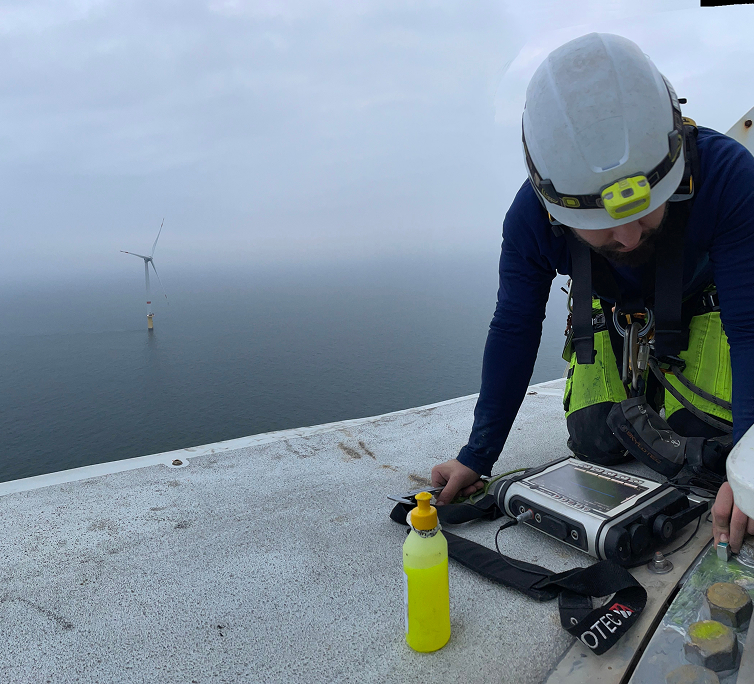
Our specialists hold the necessary qualifications and certificates in accordance with PN-EN ISO 9712 / ISO 9712 or equivalent certification systems, as appropriate to their competencies, testing method and scope of responsibility. ISO 9712 specifies the qualification and certification requirements for personnel performing industrial NDT using various testing methods.
As part of the work we perform, we ensure full traceability of testing, proper selection of the testing technique, the use of proven and calibrated equipment, and the preparation of clear final documentation, including protocols, measurement reports, photo documentation and technical recommendations.
Level 1:
ability to perform testing in accordance with an approved instruction, under the supervision of a person with higher qualifications.
Level 2:
ability to perform testing independently, select parameters, operate equipment, assess indications and interpret results in accordance with applicable standards and acceptance criteria.
Level 3:
ability to supervise testing, approve procedures, develop technological instructions, qualify personnel and provide technical consultancy in the field of NDT.
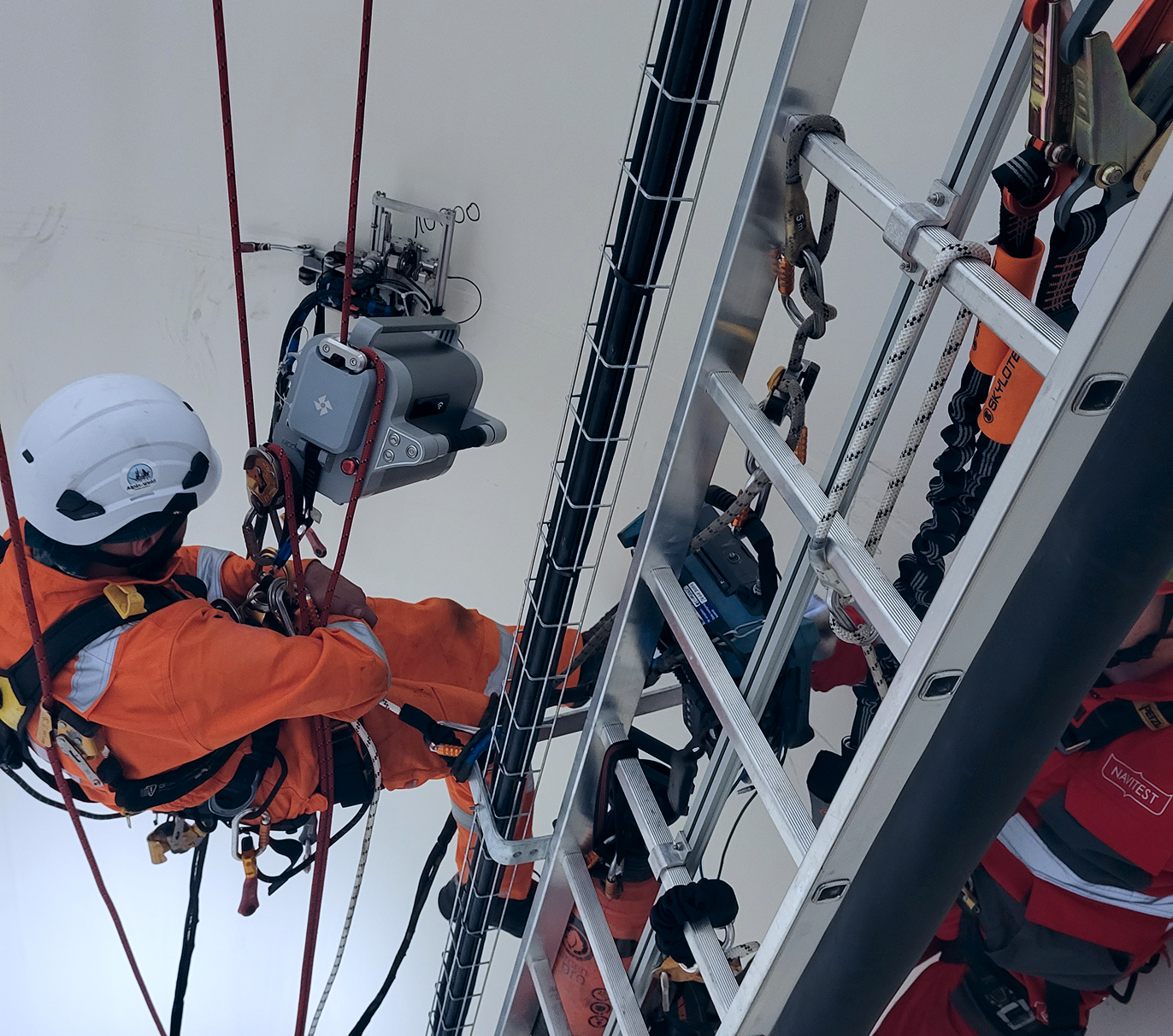
Enabling work using rope access; IRATA levels define the degree of advancement of a technician working at height: Lev.1 – work under the supervision of a technician holding Level 3, then Lev.2 – advanced rope techniques, installation and operation of more complex systems, advanced rescue, and Lev.3 – supervision and team management, responsibility for workplace safety (Risk Assessment), advanced rescue techniques.
Training including, among others, first aid, safe manual handling, fire awareness, working at height and — depending on the scope — sea survival, required particularly for projects in the wind energy and offshore sectors.

Contact us
To define the scope of testing and prepare an offer, please contact us.

us